Your Nervous System Is Out of Balance


People with this result often describe:
Feeling tense, restless, or on edge
Being “wired but tired”


From your answers, it looks like your body and nervous system have been carrying stress, even if your mind is trying to cope.
Shallow breathing or holding the breath without realising
Difficulty relaxing physically, even when mentally calm
A sense of feeling unsettled or disconnected in the body
This isn’t about flexibility, fitness, or strength. It’s about regulation.


Breathing becoming shallow or restricted
The nervous system staying slightly alert, even at rest
Over time, the body forgets how to fully switch into rest-and-repair mode.
That’s why:
Stretching may feel good but doesn’t last
Exercise can help briefly but sometimes leaves you more exhausted
“Trying to relax” often doesn’t work
Why this happens
in simple terms
When stress is ongoing, the body adapts by staying in a low-level state of readiness.
This can look like:
The issue isn’t effort.
It’s that the body hasn’t been shown how to settle again.
Muscles remaining subtly contracted


(In the traditional sense — not the fitness one)
Regulate the breath
Balance the nervous system
Support steadiness in body and mind
Why Yoga & Breathwork Help Here


Modern science now supports this:


Slow, controlled breathing influences the vagus nerve
Breath-led movement reduces excess nervous system activation
Coordinating breath and movement retrains stress responses
In the yogic tradition, yoga was never about stretching or performance.
Its original purpose was to:

Yoga and pranayama teach the body that it is safe to soften.
✔ How you breathe
✔ How you move between postures
✔ How you feel internally
✖ Not how far you stretch
That’s why traditional yoga focuses on:


You don’t need a mat or special clothing.
Sit comfortably or stand with both feet on the floor
Just try it
Try this now
Place one hand on your chest and one on your belly
Inhale slowly through the nose, letting the belly gently rise
Exhale through the nose, allowing the belly to soften
Repeat for 6–10 breaths.








Make the exhale slightly longer than the inhale


This gently signals the nervous system to downshift from alert mode into regulation.
Inhale for 4. Exhale for 6
Many people notice:


A sense of grounding
Reduced physical tension
Feeling more present in the body


That’s your nervous system responding — not willpower
Recommended next steps
OM for Breakfast
breathwork workshop
A gentle, breath-led yoga class designed to support nervous system regulation and set the tone for the week.
If you want a simple, practical introduction to the four main pranayama (traditional indian breathwork)


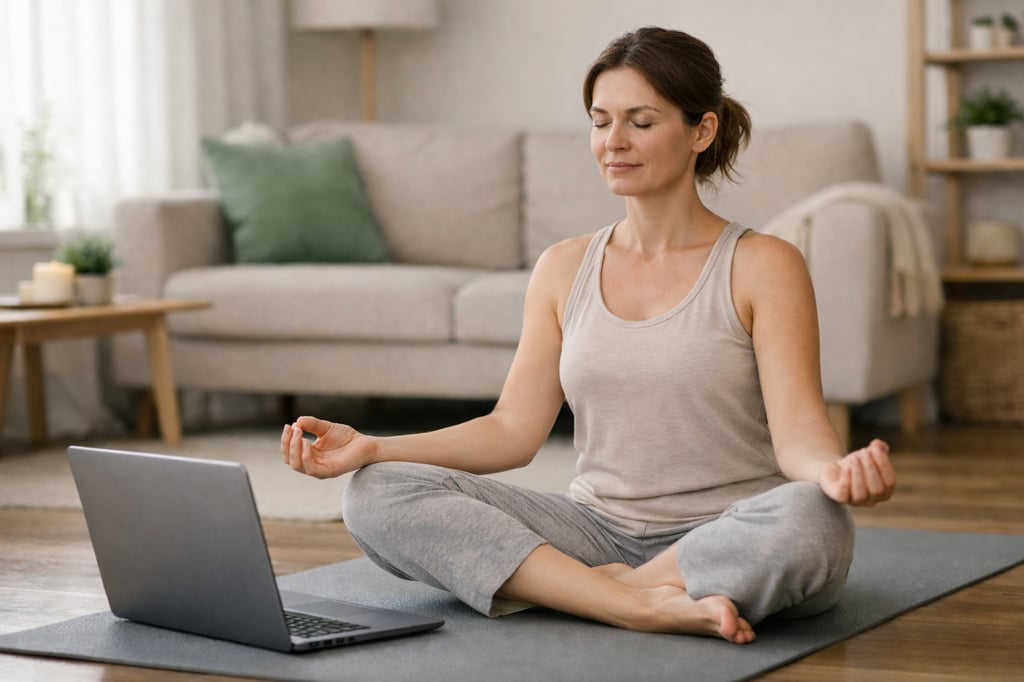
If this result resonates, practices that work directly with breath and regulation can help stabilise stress at its source, rather than releasing it temporarily.
At Grateful Minds, this is supported in the following ways:
This class is:
✔ Grounding and steady
✔ Focused on breath-led movement
✔ Suitable for all levels
✔ Available in-person and online
This workshops helps you:
✔ Understand how breathing patterns affect stress
✔ Learn traditional breathing techniques
✔ Regulate the nervous system without strain

Supportive Introduction
Yoga workshop for Beginners
If yoga has previously felt too physical or intimidating, this workshop offers a grounded entry point focused on:
✔ Slow, breath-led movement
✔ Nervous system regulation
✔ Moving in a way that supports calm and stability


A Final Reassurance
You don’t need to stretch further. You don’t need to push harder.
Your body already knows how to settle — it just needs the right signals.
Choose the option that feels most manageable right now. The nervous system responds best to safety and consistency, not intensity.
If you’re unsure which option fits best, you’re welcome to explore at your own pace or get in touch for guidance.
© 2026 Grateful Minds. All rights reserved. Website crafted with love by Alena Booth
Quick Navigation
Legal & Policies
Join the mindful tribe
Get insights, events & offers straight to your inbox.